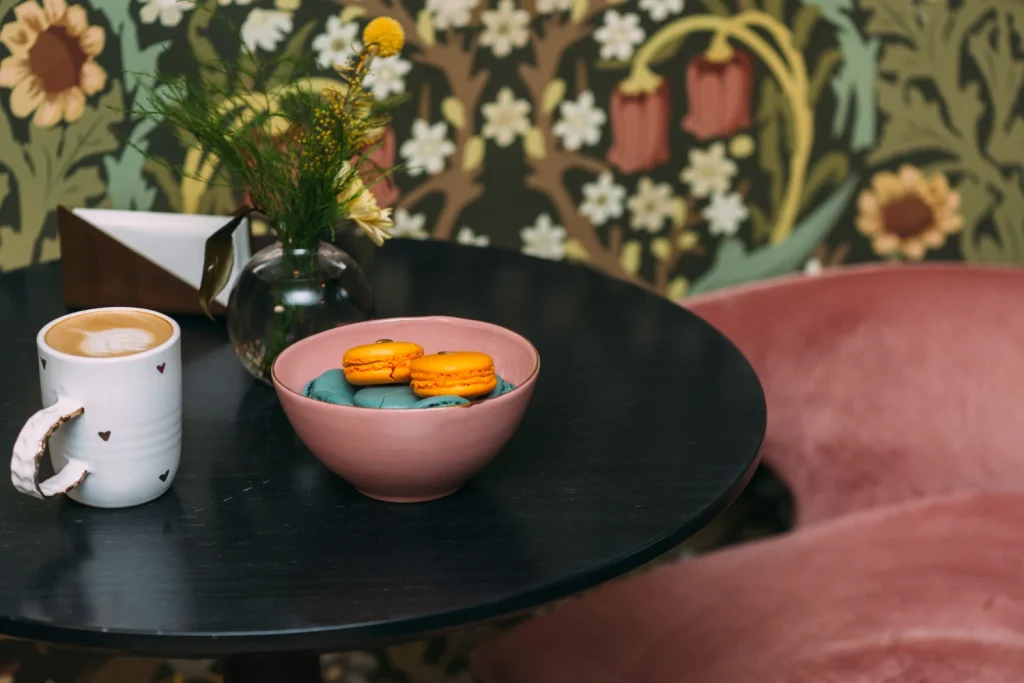
Coffee table styling is one of those interior design topics that looks simple until you actually try it. The surface seems small enough to manage, but achieving an arrangement that looks intentional, balanced, and not overly ‘decorated’ requires understanding a few compositional principles that most tutorials skip over. Once you understand those principles, styling any coffee table, large or small, round or rectangular, becomes a repeatable process rather than a guessing game.
The short version: work in groups of three, vary heights, add something organic, and leave empty space. The long version follows.
What Is the Basic Rule for Coffee Table Styling?
The core rule is grouping: objects on a coffee table should be arranged in clusters of two or three, not scattered individually. A single candle, a single book, and a single vase sitting equidistant across a surface looks arbitrary. The same three objects grouped together reads as intentional.
Within each group, vary the height. A tall vase next to a low candle next to a flat tray creates vertical rhythm. A stack of books creates height on its own and serves as a platform for smaller items like a small sculpture or a remote.
How Many Items Should Be on a Coffee Table?
Fewer than you think. The most common mistake in coffee table decor is overcrowding. A surface that’s 80 percent covered with objects looks cluttered; a surface that’s 40-50 percent covered with well-chosen objects looks styled.
For a standard coffee table, two or three distinct groupings work well: one larger composition near the center or at one end, one smaller accent grouping, and some deliberate empty space. The empty space isn’t wasted, it’s part of the composition.
The Classic Coffee Table Styling Framework
A reliable framework that works across table sizes and styles:
The Tray
Start with a tray. A decorative tray defines a zone on the table surface and contains a grouping visually without physical walls. Round trays work on round tables; rectangular trays on rectangular ones. The tray itself counts as the low element in the height composition.
Within the tray: a few objects that share a material or color theme. A candle, a small bowl or dish, and a decorative object. Keep it to three items maximum inside the tray.
The Stack of Books
Coffee table books are called that for a reason. A stack of two or three substantial books positioned near the tray grouping creates the mid-height element in the composition and adds texture through spines and covers. Books with interesting covers or consistent color spines work best. Horizontal orientation almost always looks better than books standing vertically.
Using books as platforms works well: a small plant, a sculptural object, or a candle placed on top of a book stack immediately elevates it, literally and figuratively.
The Organic Element
Every well-styled coffee table benefits from something organic: a small plant, a vase of flowers or branches, a bowl of stones, or even a piece of interesting driftwood. Organic forms introduce the irregular, living quality that contrasts with the geometric and manufactured nature of everything else on the table.
A low-maintenance option: a succulent in a small, considered pot. It reads as designed, requires almost no care, and adds green without demanding water every few days. A small pothos in a ceramic pot works similarly.
How to Decorate a Large Coffee Table
Large coffee tables give you more surface to work with but also more room for the arrangement to feel disconnected. The solution is to treat the table as two or three distinct zones rather than one large canvas.
For an oversized or sectional-adjacent table: one composition on the end nearest the main seating, one in the center, and leave the far end lighter or open. This creates a sense of distribution without the scattered feeling that comes from placing individual objects randomly across the whole surface.
A large decorative bowl or tray at the center of a big table creates an anchor and gives the eye a place to land before traveling to the flanking elements.
Coffee Table Styling by Style Direction
Minimalist
One tray with two objects. One stack of books with a single item on top. Nothing else. The empty surface is doing as much work as the objects.
Maximalist or Eclectic
More objects are allowed, but the grouping principle still applies. The difference is that the groups can be denser and more varied in material and color. A mix of metals, natural materials, and color is expected, but each cluster should still have internal logic.
Organic or Biophilic
Plants and natural materials take center stage: a large trailing plant, stones, wood objects, natural fiber tray. The emphasis is on texture and organic form over decorative objects.
What to Put on a Coffee Table: A Practical List
- Books: two to four titles, stacked, with consistent or complementary spine colors
- A tray: defines a zone and contains a grouping
- Candles: adds height variation and warmth; pillar candles or small hurricane holders work well
- A small plant or vase: the organic element
- A decorative bowl: useful for keys, remotes, or simply as a sculptural object
- A sculptural object: a ceramic piece, a small figure, an interesting stone
What not to put there: remote controls loose on the surface (use a small box or bowl), excessive personal items, or anything that suggests the table is primarily a storage surface.
For complementary inspiration on styling display surfaces throughout the home, see this guide on accent wall ideas and display approaches which addresses how objects relate to wall features.
Coffee Table Styling Ideas for Small Living Rooms
In a smaller room, scale matters more. A large arrangement on a coffee table in a tight space can make the room feel even more crowded. Keep groupings small, favor vertical over horizontal spread, and consider whether an ottoman with a tray instead of a traditional coffee table would serve the space better both functionally and visually.
For broader small-space styling principles, the guide on small bedroom layout and design ideas covers scale-appropriate furnishing decisions that apply equally to living rooms.
Where It Lands
Coffee table styling works when it follows composition principles rather than trying to fill space. Grouping, height variation, an organic element, and deliberate empty space produce the looked-for quality: intentional rather than decorated.
The difference between a coffee table that reads as designed and one that looks random is usually not the quality of the objects. It’s the structure of the arrangement. Apply the framework, edit ruthlessly, and the table will look right.