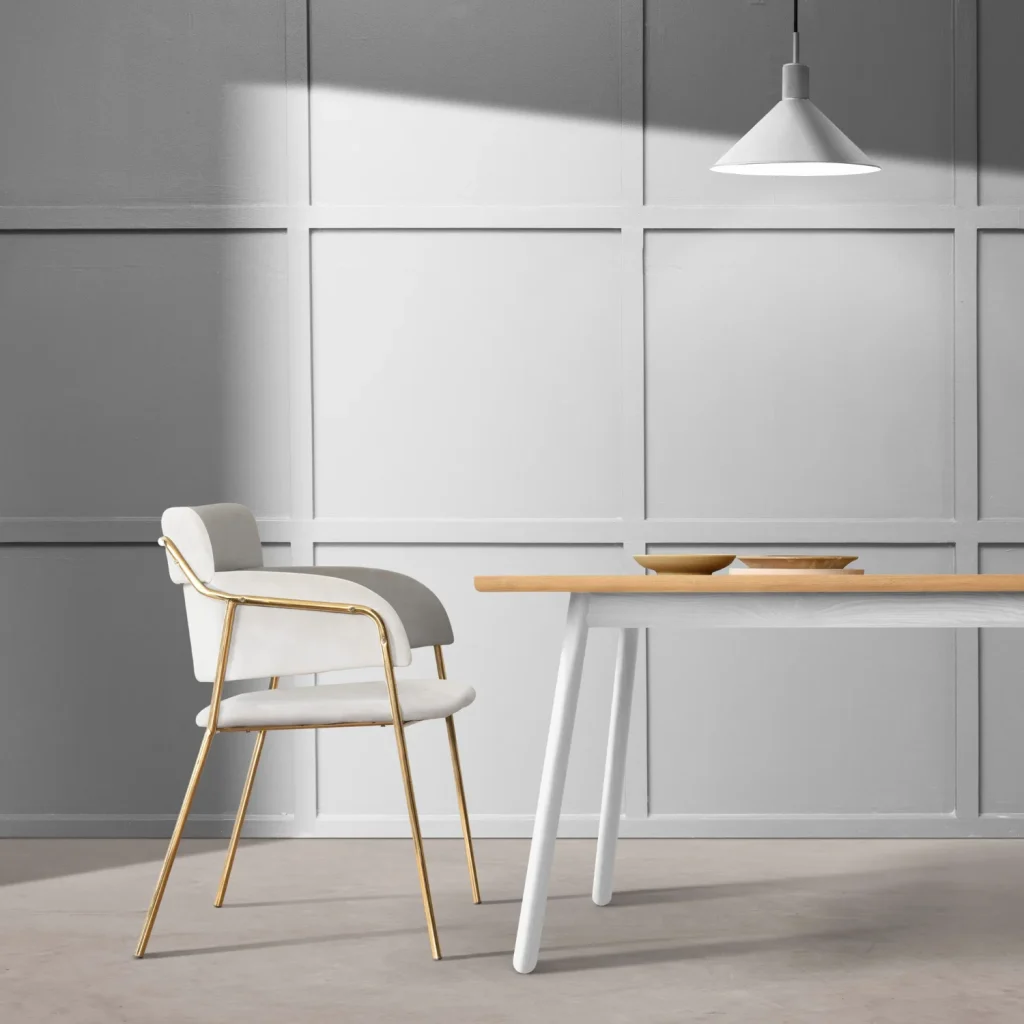
Minimalist interior design is one of the most widely referenced and least accurately practiced styles in contemporary residential design. The word gets applied to anything from genuinely disciplined spatial composition to rooms that are simply under-furnished and called minimalist as a post-hoc justification. Understanding what minimalism actually requires, as a design discipline, explains why it’s harder to execute well than it looks, and why the best minimalist interiors feel so different from spaces that have merely had things removed.
This is a subject worth approaching with precision. The principles of minimalism have intellectual and historical roots that shape how the style works in practice.
What Is Minimalist Interior Design, Actually?
Minimalist design emerged as a formalized discipline in the 1960s, drawing on earlier Modernist principles that form should follow function, and influenced by the Japanese concept of ma: the meaningful use of empty space. The core idea is that objects, forms, and surfaces should be reduced to what is essential, and that the spaces between things carry as much weight as the things themselves.
In residential interiors, this translates to: fewer objects, higher quality, stronger attention to proportion and material, and deliberate use of negative space. The visual result should be clarity. Not emptiness, but a kind of visual quiet in which the eye can rest and the elements present can be fully perceived.
What Are the Core Principles of Minimalist Interior Design?
Restraint in Object Count
Minimalist rooms contain fewer objects than conventional rooms. But the selection of those objects is more rigorous, not less. Each piece must earn its presence: functionally, aesthetically, or both. An object that is merely acceptable doesn’t make the cut. The standard is higher because the standard has to be.
This is the part most people miss. They remove things and assume the job is done. But minimalism isn’t subtraction alone. It’s replacement: removing the generic, the provisional, and the accidental in favor of the deliberate.
Material Honesty
Minimalist interiors consistently prioritize authentic materials: natural stone, solid timber, concrete, linen, leather, ceramic. These materials are used without disguise. Wood grain is visible. Concrete shows its texture. Stone has its natural variation. This honesty of material is fundamental to the style because ornamentation and surface decoration are precisely what minimalism rejects.
Imitation materials, laminate that mimics marble, vinyl masquerading as hardwood, are antithetical to this principle. Not because they’re low quality per se, but because they depend on pretense, which is the opposite of minimalism’s directness.
Rigorous Spatial Proportion
Minimalist spaces are proportionally considered in a way that conventional rooms often aren’t. Furniture is sized to the room. Gaps between pieces are intentional. Ceiling heights, window proportions, and floor plans are part of the design thinking rather than constraints to work around.
Strangely enough, this means minimalism is actually more demanding of space than maximalism. Maximalism uses objects to fill and compensate; minimalism exposes the underlying architecture. If the architecture is weak, there’s nowhere to hide.
Minimalist Living Room Ideas: Translating Principles to Practice
In a living room, minimalist design typically means: one primary sofa, possibly one accent chair, a coffee table, and no more than two or three other objects in the space. The sofa is usually substantial and well-made. The palette is tight, typically two to three colors maximum, including neutrals.
Texture carries the visual interest that pattern and color provide in other styles. A linen sofa against a smooth plaster wall against a raw wood floor: the variation in texture substitutes for the variation in color or pattern that a more maximalist room would rely on.
Modern Minimalist Living Room: The Color Question
White and off-white dominate because they create the most neutral backdrop and maximize natural light. But contemporary minimalist interiors have moved significantly beyond all-white rooms toward warmer neutral palettes: warm greiges, soft taupes, pale terracotta, and muted sage. These tones maintain the visual quiet of minimalism while adding warmth that pure white can sometimes lack.
When a stronger color is used, it’s typically in a single element: an accent chair, a rug, an art piece. One point of color in a neutral field is more powerful than several competing color notes.
Minimalist Home Decor: What to Keep, What to Remove
A practical audit for any room aiming toward minimalism:
- Remove anything that’s ‘just in case’ rather than in regular use
- Remove duplicates: two of the same type of object is almost never necessary
- Question every surface decoration: does it add genuine beauty or meaning, or is it filler?
- Evaluate furniture: does each piece serve a clear function and have genuine aesthetic merit?
- Assess storage: can it be concealed? Visible clutter is incompatible with minimalism regardless of how good the individual items are
Concealed storage is a structural feature of good minimalist design. Built-ins with clean faces, under-bed storage, kitchen cabinets that go to the ceiling, these all serve the same function: keeping visual complexity low so the room reads as calm.
For specific storage ideas that support a minimalist approach in the bedroom, see this guide on small bedroom layout and storage ideas.
Cozy Minimalist Living Room: Can They Coexist?
Yes. The perception that minimalist spaces are cold comes from poorly executed minimalism, not from the style itself. A room that’s been stripped of objects but retained hard surfaces, cool lighting, and no soft furnishings will feel austere. A minimalist room with warm-toned natural materials, soft lighting, a quality rug, and linen or wool textiles feels calm and inviting.
The cozy minimalist living room is a real and achievable thing. The formula is: rigorous about object count, generous about material quality and warmth. Fewer pieces but better ones, and those pieces should invite physical comfort.
Minimalist Furniture Ideas: What to Look For
- Clean lines without excessive ornamentation or carved detail
- Structural integrity: the form should read as capable of standing on its own without covering
- Natural materials or high-quality composites honestly presented
- Proportional to the room: oversized in a small room or undersized in a large one undermines the spatial logic
- Neutral or naturally toned palette that doesn’t compete with the room
A well-organized home reduces visual entropy, which directly supports a minimalist approach. For practical guidance on clutter reduction across the home, see this resource on home organization hacks to reduce clutter.
The Discipline Behind the Style
Minimalism in interior design is ultimately a discipline of editing. It requires deciding, repeatedly and rigorously, what is essential and what is not. That’s harder than it sounds because humans naturally accumulate, personalize, and hold onto things. The minimalist home asks you to make and maintain different choices.
The payoff, when it works, is a space with unusual clarity. A room where each element is perceived rather than registered as background. Where the quality of light in the afternoon, the grain of a stone surface, the silence of an open floor, these things become perceptible in ways they can’t be when the room is full.
That quality of perception is what distinguishes genuine minimalism from rooms that are just sparse. And it’s worth the discipline it requires.