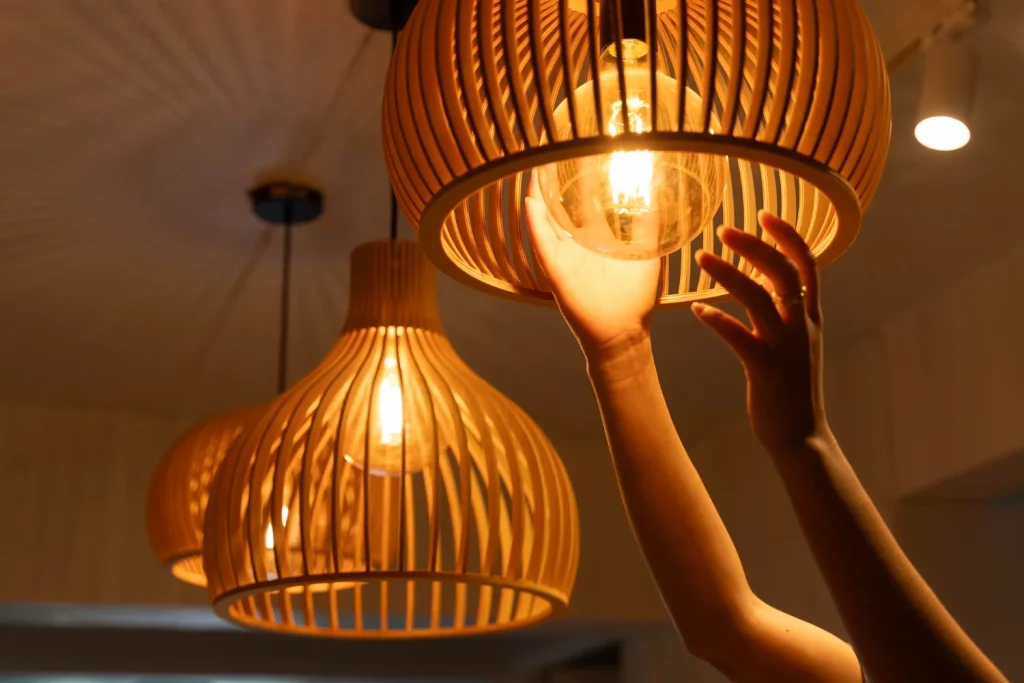
Cozy lighting is less about fixtures and more about strategy. The warmth and intimacy of a well-lit living room at night comes from layering multiple light sources at different heights, using warm color temperatures, and eliminating the flat, shadowless quality that overhead lighting alone creates. Get the lighting right and a room feels completely different even before you change a single piece of furniture.
Most people rely on one overhead light. That single decision accounts for more uninviting rooms than any other design choice.
What Is Cozy Lighting, Exactly?
Cozy lighting, often called ambient lighting, refers to the soft, diffused, layered light that fills a room with warmth without creating harsh contrasts or glare. It’s the opposite of task lighting, which is bright and directional. Ambient room lighting wraps around you rather than pointing at you.
In practice, cozy living room lighting comes from multiple sources working together: floor lamps, table lamps, wall sconces, candles, and sometimes string lights. Each source contributes a pool of warm light. Overlapping pools create the soft, layered effect that reads as intimate and comfortable.
Why Does Overhead Lighting Kill the Cozy Feel?
The issue with a single overhead light is physiological as much as aesthetic. Humans evolved to associate bright overhead light with daytime and alertness. Soft, lower-angled light from multiple sources reads, neurologically, like firelight or candlelight. It signals rest and relaxation.
Overhead lighting also creates unflattering downward shadows and eliminates the depth and texture that make a room visually interesting. Shadows define form. Remove them and everything looks flat.
Turning the overhead off entirely and switching to lamps is often the fastest way to transform a living room’s mood. No new furniture. No repainting. Just the lights.
How Do You Create Ambient Lighting in a Living Room?
The short answer: layer. Aim for a minimum of three light sources at different heights in the room.
- A floor lamp in a corner casts light upward and outward, warming the upper portion of the room
- Table lamps on side tables or consoles bring light to a mid-level, closer to where people sit
- Candles or low decorative lights on coffee tables or shelves add the lowest layer
- A dimmer switch on any overhead fixture gives you the option to use it at very low levels as fill rather than primary light
The combination of these sources creates the layered, dimensional quality that distinguishes a well-designed ambient lighting scheme from a room that just has a lot of lamps randomly placed.
What Color Temperature Creates the Warmest Feeling?
Color temperature is measured in Kelvin. The lower the number, the warmer and more amber the light. The higher the number, the cooler and more blue-white it becomes.
For cozy lighting in living rooms and bedrooms, the target range is 2200K to 2700K. Bulbs in this range produce a warm, amber-toned light that reads as intimate. Standard ‘warm white’ bulbs typically fall around 2700K and are a solid baseline choice.
Cooler bulbs in the 4000K to 5000K range, often labeled ‘cool white’ or ‘daylight,’ work well for tasks like reading or cooking but actively undermine a cozy atmosphere. Worth noting: many LED strips default to a neutral or cool white and need to be selected deliberately in the warm range.
Cozy Lighting Ideas by Room Zone
Seating Area
The seating area is the heart of the living room. It benefits most from side lighting at lamp height, flanking sofas or chairs. A floor lamp behind a reading chair is a classic for good reason. It provides reading light without spilling harsh brightness across the whole room.
Ambient Lamps
Table lamps with fabric or opaque shades are significantly more effective at creating cozy ambient light than those with transparent or open shades. The shade diffuses the light, softening its spread and eliminating the visible glare of the bulb. A lamp with a reflective or metallic interior to the shade bounces more light upward, adding warmth to the upper walls and ceiling.
Mood Lighting for Living Room Corners
Corners are the most underlit parts of most rooms, and that matters because dark corners shrink a space visually. A floor lamp or uplighter placed in a corner pushes light upward along the walls, making ceilings feel higher and the room feel larger. It also breaks up the uniform darkness that makes rooms feel oppressive at night.
How to Add Ambient Lighting Without Major Changes
You don’t need to rewire anything. Plug-in wall sconces and plug-in pendant lights exist specifically to add the visual effect of built-in fixtures without electrical work. They run along the baseboard behind furniture where the cord disappears.
Smart bulbs allow any existing lamp to become a warm, dimmable light source controllable from your phone or a voice assistant. Setting them to dim automatically after 8pm costs nothing beyond the bulbs and makes evening routine consistent.
String lights, when used intentionally rather than decoratively, can create a genuinely effective ambient effect. They work particularly well in small kitchens and compact spaces. See some ideas in this resource on small kitchen ideas for renters where layered lighting is one of the main strategies discussed.
Soft Lighting for Living Room: Common Mistakes
A few things that undermine living room ambient lighting even when the rest of the setup is right:
- Using cool-white or daylight bulbs in otherwise warm lamps, which creates a jarring mismatch
- Having all lamps at the same height, which flattens the layering effect
- Using too many bright sources, which recreates the same clinical quality as overhead lighting
- Neglecting dimmer switches, which are probably the single most cost-effective lighting upgrade available
Lighting is also a key factor in how handmade and crafted items are displayed. See how light affects gift presentation and display in this guide on DIY handmade gift ideas.
Indoor Ambient Lighting: A Quick Reference
Color temperature guide for warm and cozy spaces:
- 2200K: Candlelight equivalent. Very warm, amber-heavy. Best for very low-light accent use.
- 2700K: Warm white. Standard incandescent equivalent. Best for primary lamp use in living spaces.
- 3000K: Soft white. Slightly cooler, still warm. Works in kitchens and transitional spaces.
- 4000K and above: Cool white to daylight. Not recommended for cozy spaces.
The Bigger Picture
Cozy lighting transforms a room’s atmosphere more efficiently than almost any other intervention. A new sofa changes the room. Better lighting changes how the room feels to be in. That’s a different and often more valuable outcome.
The investment required is modest. A few lamps, warm bulbs, and a dimmer switch can completely reshape how a living room reads in the evening. The formula is consistent: warm color temperatures, multiple low-to-mid-height sources, and the willingness to turn the overhead light off.
Start with one floor lamp and one table lamp, both with 2700K bulbs, both on in the evening with the overhead off. See if the room doesn’t already feel entirely different. It usually does.