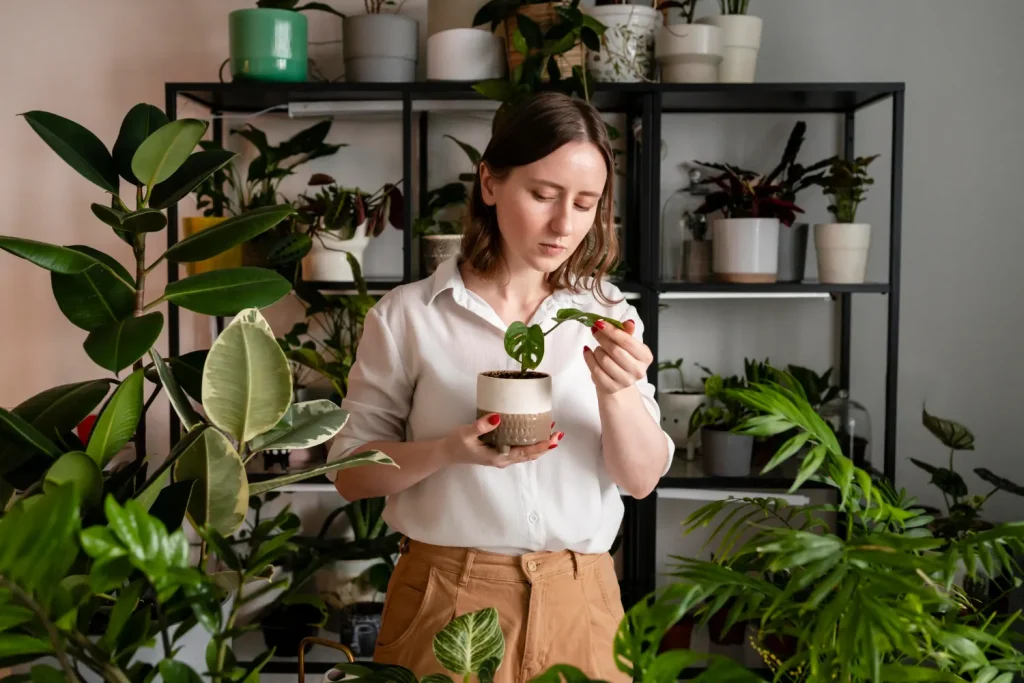
Decorating with plants successfully isn’t simply a matter of acquiring plants and distributing them around a room. It requires an understanding of proportion, grouping, light conditions, and the relationship between plant form and the other elements in the space. When executed thoughtfully, indoor plant decoration adds texture, organic movement, and a living quality that no manufactured material can replicate. When executed carelessly, it produces a room that looks cluttered and random.
This guide addresses both dimensions: the principles that distinguish effective plant decor from arbitrary placement, and the practical decisions that determine which plants go where.
Why Does Plant Decor Work in Interior Design?
Plants introduce three things that interior design inherently benefits from: organic form, natural texture, and scale variation. Most interior elements, furniture, textiles, and art, are geometric or structured in some way. Plants interrupt that order with curves, irregular silhouettes, and layered texture. That contrast is part of what makes them effective.
There is also a growing body of research from institutions including the Royal Horticultural Society and NASA’s Clean Air Study suggesting that indoor plants contribute to improved air quality and psychological wellbeing. Whether this effect is dramatic in typical residential settings is debated, but the evidence that proximity to natural elements reduces stress responses is fairly consistent.
How Do You Arrange Plants in a Living Room?
The most effective plant arrangements in living rooms follow a few consistent principles: grouping by height, varying species within a group, and treating plants as compositional elements rather than incidental additions.
A plant corner is one of the most reliable approaches. Three plants of different heights in the same corner of a room create a visual anchor that draws the eye without dominating the space. The tallest plant might reach five or six feet; the middle, two to three; the lowest might sit on a small stool or side table. The variation in height and leaf texture creates depth.
Avoid distributing single plants evenly across a room. One plant on a windowsill, one on a bookshelf, one in a corner, each alone, reads as an afterthought. Groups read as decisions.
How to Display Plants in a Living Room: Practical Options
- Plant stands: elevate smaller plants to mid-height, creating the illusion of a larger specimen
- Hanging planters: effective for trailing plants like pothos or string of pearls; use ceiling hooks rated for the weight
- Built-in shelving: a bookshelf with plants interspersed among books and objects creates a layered, curated look
- Window sills: effective for sun-loving plants; consider the aesthetic impact from outside as well as inside
- Floor placement: reserved for large specimens like fiddle-leaf figs, bird of paradise, or monstera
Which Plants Work Best for Indoor Decoration?
The answer depends on light conditions first, aesthetics second. A beautifully chosen plant in the wrong light conditions will decline over weeks to months, and a wilting plant undermines any decorating scheme.
Low-Light Tolerant Plants
- Pothos: extremely forgiving, effective as trailing or climbing
- ZZ plant: architectural form, tolerates neglect, works well in dark corners
- Snake plant: strong vertical silhouette, nearly indestructible
- Peace lily: flowers in low light, good for adding a different visual register
Bright-Light Plants
- Fiddle-leaf fig: high impact, requires consistent bright indirect light and stable conditions
- Bird of paradise: large, tropical, needs substantial light; a genuine statement plant
- Monstera deliciosa: distinctive split leaves, adaptable but benefits from good light for larger leaf development
- Succulents and cacti: best on south or west-facing windowsills
How to Style Plants as Part of a Designed Interior
The most significant decision in plant decoration is the selection of vessels. The pot or planter matters as much as the plant itself. A beautiful plant in a mismatched or low-quality pot undermines the overall effect. The vessel should relate to other materials in the room: ceramic with ceramic, concrete with industrial finishes, terracotta with natural materials and warm palettes.
Color is worth considering carefully. Terracotta pots have had a major resurgence for good reason: the warm orange-red reads well against most foliage colors and suits a wide range of interior styles. All-white or matte black pots are more contemporary and work in modern or minimalist interiors. Woven baskets function as a middle layer, adding texture while concealing a utilitarian nursery pot.
For context on how plants integrate with gallery-style wall arrangements, see this guide on how to make a gallery wall, which addresses balancing two-dimensional art with three-dimensional objects.
Plant Room Design: When Plants Become the Concept
A plant room, or plant-dominant interior, takes the concept further. Instead of plants as accents, they become the primary design element. Shelving systems cover walls and support dozens of specimens. Floor plants anchor corners. Hanging plants create canopy effects. The overall effect is lush, immersive, and increasingly common in contemporary interior design.
This approach requires more sustained care and a genuine commitment to managing moisture, pest control, and the growth patterns of many plants over time. It also requires structural consideration: shelving must be properly anchored, and hanging systems must support weight reliably.
A well-organized storage approach becomes important in plant-heavy rooms. See how to manage space efficiently in this overview of small closet storage ideas which applies similar principles of maximizing density while maintaining visual order.
Decorating with Houseplants: What to Avoid
Several common errors undermine otherwise effective plant decoration. Worth noting:
- Overcrowding: too many plants in one area creates visual chaos rather than lush abundance
- Matching plants to decor rather than light: the room dictates where plants can go, not the other way around
- Ignoring scale: a small plant on a large surface disappears; a large plant in a small space overwhelms
- Inconsistent vessel styles: mixing too many pot materials and colors fragments the visual effect
What This Means for Your Space
The most effective plant decor decisions are disciplined ones. Choose a limited number of planting styles and commit to them. Group plants rather than scattering them. Let light conditions determine placement, then work the aesthetics around that constraint.
Plants reward care and attention in ways that most design elements don’t. A well-positioned fiddle-leaf fig that’s thriving communicates something fundamentally different from a plastic plant or a framed print. There’s a living quality to it that changes as it grows, leafs out, and responds to seasons.
That quality, organic and impermanent, is ultimately why decorating with plants works. Not because plants look good, though they often do, but because they introduce something genuinely alive into a space composed primarily of inert materials.